The GoCrypto wallet question, answered in thirty seconds
Let us save you some scrolling. The GoCrypto trading simulator — the app with 25M+ Google Play downloads from MOBILE EDTECH SOLUTIONS LIMITED in Cyprus — does not have a wallet. Not a custodial one, not a non-custodial one, not a hidden one. What it has is a virtual portfolio: a number on a screen tracking imaginary money against real market prices. There are no private keys, no seed phrase, no blockchain addresses anywhere in the app, because the coins it displays do not exist on any blockchain.
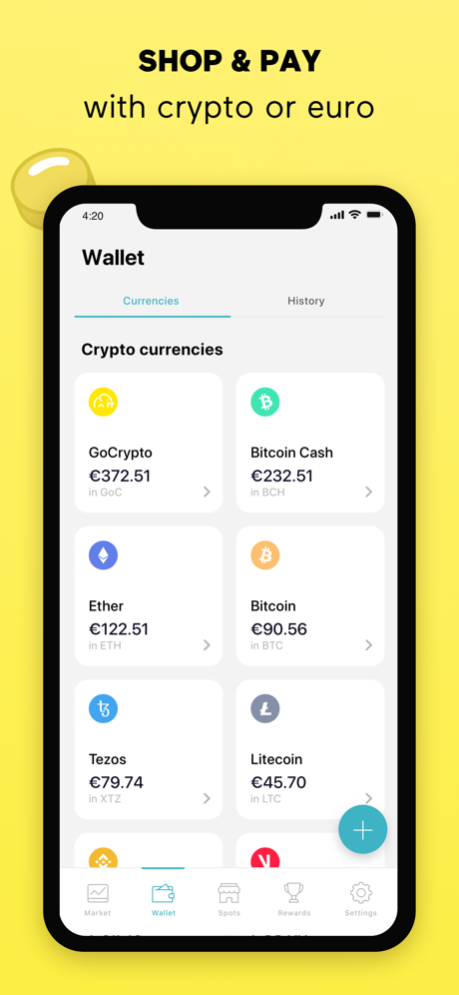
Meanwhile, a completely different company — Eligma Labs d.o.o. of Ljubljana, Slovenia — operates a crypto payment network also called GoCrypto (gocrypto.com), and that product genuinely did ship a wallet app, formerly known as Elly, alongside its GoC token. Same name, different continent, zero relationship. Most of the confusion around "GoCrypto wallet" is these two products colliding in search results.
So this page does three jobs. First, we explain why the simulator having no wallet is a feature you should be glad about. Second, we tell the Eligma story properly so the name collision stops costing people money. Third — because most people searching this phrase are really asking "where do I keep crypto?" — we give you the practical wallet education the simulator cannot: custodial vs non-custodial, how to choose, and how not to lose everything to one photographed seed phrase.
Why the simulator has no keys — and why that is good news
A crypto wallet, despite the name, does not store coins. Coins live on the blockchain as ledger entries. A wallet stores keys — the cryptographic secrets that authorize moving those entries. No keys, no control; keys, total control. That is the entire security model of crypto in one sentence.
The GoCrypto simulator sits outside this model entirely. Its balances are rows in the developer's game database, like gold in a video game. When you "buy Bitcoin" in the app, no transaction touches the Bitcoin network; the game simply updates your score using the live price feed. That is why, as we detail in our explainer, there are no deposits and no withdrawals — the app is not being stingy, it is being architecturally incapable of holding real value. The same reason is why you cannot withdraw money from GoCrypto: there was never money in the first place.
Here is the part beginners underrate: this makes the simulator one of the few crypto apps that cannot lose your funds. No exchange hack applies to you. No seed-phrase phishing applies to you. Your worst-case scenario is wasted time and some leaked marketing identifiers (see the privacy notes in our legitimacy audit). In an industry where beginners routinely lose real savings to fake wallets, "no keys at all" is a genuinely safe place to learn vocabulary.
The other GoCrypto: the Eligma payment wallet story
Now the product that actually earns the phrase "GoCrypto wallet." Eligma Labs, founded in Ljubljana, Slovenia, built GoCrypto as payments infrastructure: a network letting physical shops and online merchants accept cryptocurrency (and euros) at the till, with settlement handled behind the scenes. The ecosystem included the GoC token and a consumer companion app — originally launched as Elly, later rebranded under the GoCrypto name — which worked as the customer-side wallet for paying at supported merchants.
This is real financial plumbing: actual coins, actual keys, actual merchants, mostly across Slovenia and neighboring markets, and it predates the Cypriot simulator by years. Which produces the collision: the payment network has years of articles, reviews and token listings using the exact phrase "GoCrypto wallet," while the simulator — the thing 25 million people actually installed — has none, because it has no wallet. People download the game, search for its wallet, land on Eligma content, and conclude the game holds real coins. It does not.
| Simulator "portfolio" | Eligma GoCrypto wallet | Real personal wallet | |
|---|---|---|---|
| Company | MOBILE EDTECH SOLUTIONS LIMITED (Cyprus) | Eligma Labs d.o.o. (Slovenia) | Various (you choose) |
| Holds real crypto | No — virtual only | Yes — for payments at merchants | Yes — anything you send it |
| Private keys / seed phrase | None exist | Managed within the payment ecosystem | Yours, via seed phrase |
| Purpose | Practice and play | Spending crypto at shops | Storing and controlling your coins |
| If the company vanishes | You lose a game score | Payment service stops | Non-custodial: your coins remain yours on-chain |
We state this matter-of-factly because there is no scandal here — just two firms who liked the same name. But when you read a review, check which GoCrypto it is about before you let it move your opinion, or your money.
Custodial vs non-custodial: the 101 the simulator skips
Since the simulator cannot teach custody — its most important structural gap — let us do it here, on fingers.
A custodial wallet is a bank. When you keep coins on an exchange, the exchange holds the keys and owes you the balance. Convenience is excellent: forgot your password, support resets it; want to trade, the coins are already there. The cost is dependence. If the exchange is hacked, freezes withdrawals or goes bankrupt, your access goes with it. The 2017-vintage phrase still holds: not your keys, not your coins.
A non-custodial wallet is a personal safe. The app generates keys on your device, gives you a 12- or 24-word seed phrase as the master backup, and from then on you alone control the funds. Nobody can freeze them; nobody can seize them through the app; and — the same coin, other face — nobody can help you if you lose the phrase. There is no support line, no "forgot my seed" button, no exceptions for sympathetic stories. The safe does not care that you are crying in front of it.
The GoCrypto simulator is neither. No keys exist, so custody is undefined — the same way a Monopoly board has no bank regulator. That is fine for practice, but it means simulator graduates arrive at real crypto with zero custody instincts. Build them deliberately, starting with the checklist below, and only after you have absorbed what the simulator can and cannot teach about trading itself.
How to choose a real wallet: the auditor's checklist
When you eventually hold real coins, choose the container like an auditor, not like a fan. Our criteria, in the order that actually matters:
- Custody model first. Decide consciously: custodial (exchange) for small amounts you actively trade; non-custodial for anything you intend to keep. Most losses we have seen since 2017 come from people who never made this decision at all.
- Open source and audited. Prefer wallets whose code is public and has third-party security audits. Closed-source wallets ask for blind trust with your keys — the exact thing crypto was designed to remove.
- Team and track record. Who builds it, for how long, and how did they handle past vulnerabilities? A wallet that patched and disclosed honestly beats one with a spotless-looking but unverifiable history.
- Genuine seed-phrase control. A non-custodial wallet must show you the phrase at setup and never transmit it. If an app offers to "back up your seed to our cloud" by default, treat that as a custody model wearing a costume.
- Network support you actually need. Sending tokens on the wrong network — the classic
ERC-20vsTRC-20confusion — destroys funds. Pick a wallet that clearly labels networks rather than hiding them behind cheerful icons. - Download hygiene. Only from the official site or official stores, exactly as we preach for the simulator in our download guide. Fake wallet apps are the single most efficient theft machine in crypto: they simply ask for your seed phrase and empty you.
Seed-phrase safety: the ritual that decides everything
One habit separates people who keep their crypto from people who tell sad stories: how they treat those 12–24 words. The rules are absolute, and every one is written in someone's losses.
- Write it on paper (or steel), never digitally. No photos, no screenshots, no notes app, no email drafts, no password managers synced to the cloud. Malware hunts for exactly these.
- Never type it into any website. A wallet asks for a seed phrase only when restoring a wallet in its official app. Every "validate your wallet," "sync for the airdrop," or "verify to receive your GoCrypto payout" prompt is theft in progress.
- Nobody legitimate will ever ask for it. Not the wallet team, not exchange support, not this site, not "Anna from compliance." The request itself is 100% diagnostic of a scam.
- Store the backup separately from the device. Fire, theft and house moves take both at once with depressing frequency.
- Test the restore. Before funding a wallet seriously, wipe it and restore from your written phrase once. A backup you have never tested is a hope, not a backup.
⚠️ High-risk moment: the week you move from simulator to real coins is when phishers find you — in app-review sections, Telegram "GoCrypto communities" and YouTube comments, offering wallets, payouts and airdrops. You have never been more enthusiastic and less experienced than that week. Assume every unsolicited wallet link is hostile, because statistically it is.
Hardware wallets and the 2026 landscape: your eventual next step
Once your holdings reach an amount that would genuinely hurt — our rough rule since 2017: more than one month's salary — a hardware wallet becomes the sensible upgrade. It is a small device that keeps keys in a chip that never touches the internet; transactions are signed inside it, so even a malware-riddled computer cannot leak the phrase. Buy only from the manufacturer directly (marketplace "deals" have shipped pre-tampered devices), initialize it yourself so the seed is generated in front of you, and never use a device that arrives with a seed phrase already printed for you — that is a pre-robbed safe.
The 2026 landscape has also softened the old all-or-nothing custody cliff. Account abstraction and smart wallets bring social recovery, spending limits and multi-factor approvals to self-custody, and under MiCA, EU exchanges now operate with clearer custody and disclosure duties than the wild years. Both trends help beginners — but neither repeals the fundamentals. Keys still rule coins; seed phrases still forgive nothing; and no regulation anywhere protects a person who types their phrase into a phishing site while chasing a payout from a game. That instinct — checking the foundation before trusting the paint — is the entire skill, and you can start building it today, for free, with nothing at risk. Which, to give the simulator its due, is exactly the mindset GoCrypto lets you practice before the stakes turn real.
Bottom line: three answers to one search
If you searched "GoCrypto wallet," here is your complete answer. The simulator has no wallet — its portfolio is a game score, no keys exist, and anyone offering you deposit addresses in its name is a thief. The real GoCrypto wallet belongs to Eligma Labs' unrelated Slovenian payment network, with its GoC token and merchant tills. And the wallet you actually need, when practice turns to reality, is one you choose with an auditor's checklist: custody model decided consciously, code audited, seed phrase on paper, hardware once it matters. Learn in the sandbox, then store like a professional — in that order, and never the reverse.
Done practicing?
Open a Live Trading Account →